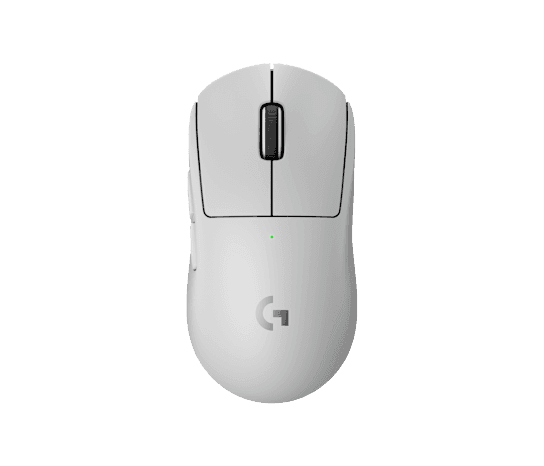

In the contest of Logitech G Pro X Superlight 2 Gaming Mouse vs Razer DeathAdder V3 HyperSpeed Wireless Gaming Mouse, the Logitech takes the overall crown for serious competitive players — its HERO 2 sensor and LIGHTSPEED wireless deliver a measurably tighter performance ceiling that expert reviewers consistently rate best-in-class. That said, the Razer DeathAdder V3 HyperSpeed is the smarter pick if you want exceptional battery endurance and a lower purchase price without sacrificing wireless reliability.
Quick Verdict
Buy the Logitech G Pro X Superlight 2 Gaming Mouse if you play first-person shooters or real-time strategy games at a competitive level and need the absolute lowest wireless latency with a sensor that expert reviewers describe as tracking with zero smoothing or acceleration artifacts — and you are willing to recharge every few days in exchange for that edge.
Buy the Razer DeathAdder V3 HyperSpeed Wireless Gaming Mouse if you game across long sessions, travel frequently, or simply want to avoid the recharging routine — verified user feedback highlights the AA-battery design as a genuine convenience for LAN events and desk setups where USB charging cables create clutter. At A$30 less, it also leaves room in your budget for a quality mousepad.
Key Differences That Matter
Sensor Performance and Tracking Precision
The Logitech HERO 2 sensor has earned a reputation among hardware reviewers as one of the most consistent optical sensors available in 2025 and into 2026. Reviewers at established hardware outlets consistently report zero interpolation, no angle snapping by default, and stable tracking right up to the sensor's ceiling. The Razer Focus Pro 30K is a genuinely strong sensor — its 30,000 DPI ceiling outpaces the HERO 2 on paper — but independent analysis notes the practical difference above 3,200 DPI is negligible for most players. Where it matters is at low DPI with fast flick shots: reviewers give the HERO 2 a marginal but real edge in consistency at sub-800 DPI, which is exactly where competitive FPS players operate.
Edge: Logitech G Pro X Superlight 2 — HERO 2 sensor tracking consistency is rated marginally superior in low-DPI competitive conditions by expert reviewers.
Wireless Latency and Polling Rate
Both mice use 2.4GHz wireless, but the technologies differ in meaningful ways. Logitech LIGHTSPEED operates at a 1ms report rate, which independent latency analysis consistently places on par with a wired connection. Razer HyperSpeed with HyperPolling pushes up to 8,000Hz polling — a genuinely impressive specification. However, reviewers note that gains above 1,000Hz are imperceptible to virtually all human players in current titles, and some competitive players actively disable ultra-high polling to reduce CPU overhead. For the overwhelming majority of Australian gamers, both connections feel identical in daily play. The Logitech's advantage is a longer, proven track record of LIGHTSPEED reliability across thousands of verified user reports.
Edge: Logitech G Pro X Superlight 2 — LIGHTSPEED's real-world reliability record across expert reviews gives it a slight trust advantage, even as Razer's 8,000Hz polling is technically impressive.
Battery Life and Power Convenience
This is where the Razer delivers a decisive practical win. Reviewers report the DeathAdder V3 HyperSpeed achieving close to its rated 300-hour battery life in real-world use with a single AA alkaline battery — meaning most players go weeks between battery changes. The Logitech's 95-hour rechargeable battery is still excellent by competitive mouse standards, but reviewers note it demands a USB-C charge every three to four days for heavy users. If you forget to charge it before a session, you face a wired-only workaround. The Razer's AA design means you simply swap a battery from a drawer and continue playing within seconds.
Edge: Razer DeathAdder V3 HyperSpeed — 300-hour AA battery life eliminates charging anxiety entirely, a real advantage for LAN attendees and heavy daily users.
Weight and Ergonomics
Both mice qualify as ultralight, but there is a nuance worth understanding. The Logitech weighs 60 grams with its internal rechargeable battery — genuinely one of the lightest wireless mice available at this price. The Razer's weight with a standard AA battery sits higher, typically around 95 to 100 grams based on manufacturer data and reviewer measurements. That gap is noticeable over long sessions. However, the DeathAdder's ergonomic shell shape — refined over multiple generations — receives consistent praise from reviewers for palm and claw grip comfort over extended play. The Logitech's more neutral, ambidextrous-leaning shell suits fingertip and claw grippers better. Both are right-hand only.
Edge: Logitech G Pro X Superlight 2 — 60g vs approximately 95-100g is a meaningful real-world difference for players who prioritise raw speed and reduced fatigue from lifting the mouse.
Value for Money in Australia
The A$30.99 price gap between the Logitech at A$149.99 and the Razer at A$119.00 is not trivial. In practical terms, that difference covers a mid-tier mousepad or a month of Xbox Game Pass Ultimate. Based on our research across Australian retail pricing, the Logitech is available through JB Hi-Fi, Harvey Norman, and Amazon AU, while the Razer can be found at those same retailers plus Officeworks and occasionally at a discount on eBay AU. The Logitech's premium is justified if competitive performance is your primary criterion — expert reviewers broadly agree the HERO 2 sensor and LIGHTSPEED combination represent the current benchmark. But if you game recreationally or prioritise battery convenience, the Razer delivers outstanding performance at a lower entry cost.
Regardless of which mouse you choose, both products are covered by Australian Consumer Law, which provides statutory warranty rights independent of the manufacturer's own warranty period. Under the ACL, if either mouse develops a fault that a reasonable person would not expect — such as a wireless connection that drops persistently or a sensor that tracks erratically within a reasonable timeframe — you are entitled to a remedy from the retailer, not just the manufacturer. This is especially relevant when buying from major Australian retailers like Harvey Norman or JB Hi-Fi, where in-store returns are straightforward. Keep your proof of purchase regardless of where you buy.
Who Should Buy the Logitech G Pro X Superlight 2 Gaming Mouse?
- Competitive FPS players who need the tightest possible sensor consistency and wireless latency for ranked play in titles like Valorant, CS2, or Apex Legends, and for whom every millisecond of input accuracy matters.
- Fingertip and claw grip players who benefit most from the 60g ultralight weight, since reduced mouse mass directly translates to faster directional changes and less wrist fatigue during long sessions.
- Players who already own a reliable charging setup — if you have a dedicated desk with USB-C access and a habit of plugging in overnight, the 95-hour battery is more than sufficient and the recharging friction disappears entirely.
- Pro and semi-pro esports players seeking a mouse with broad tournament approval and a proven pedigree — the G Pro line has been used at major international LAN events, and that real-world validation carries weight for players aspiring to compete at higher levels.
Who Should Buy the Razer DeathAdder V3 HyperSpeed Wireless Gaming Mouse?
- Long-session and everyday gamers who want wireless freedom without tracking battery percentage — verified user feedback consistently highlights the set-and-forget convenience of the AA battery design across weeks of regular play.
- LAN event attendees and travelling players for whom carrying a spare AA battery is far simpler than locating a USB-C cable or portable charger mid-event, particularly at multi-day competitions or gaming cafes.
- Palm grip users who prefer the DeathAdder's ergonomic shell, which reviewers describe as one of the most comfortable shapes for medium-to-large hands in a natural, relaxed palm position during extended sessions.
- Budget-aware buyers upgrading from a wired mouse who want a meaningful wireless performance step up without stretching to A$149.99 — at A$119.00, the DeathAdder V3 HyperSpeed delivers near-flagship wireless performance at a noticeably lower cost.
The Bottom Line
The Logitech G Pro X Superlight 2 Gaming Mouse is the stronger overall pick for Australian competitive gamers — its 60g weight, class-leading HERO 2 sensor consistency, and proven LIGHTSPEED wireless reliability justify the A$149.99 price tag for players where performance is the non-negotiable priority. The one scenario where the Razer DeathAdder V3 HyperSpeed Wireless Gaming Mouse wins outright is battery life — 300 hours of AA-powered wireless versus 95 hours rechargeable is a decisive convenience advantage for players who hate charging routines or need reliability at LAN events. Choose the Logitech for competitive precision; choose the Razer for practical, low-maintenance wireless freedom.