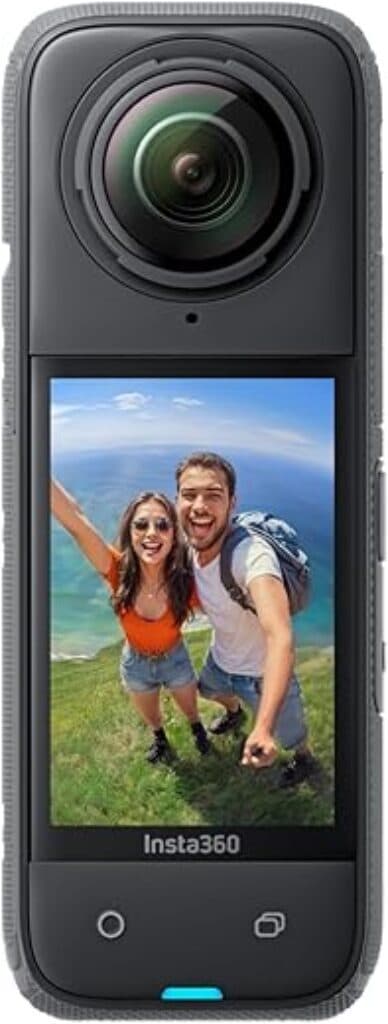
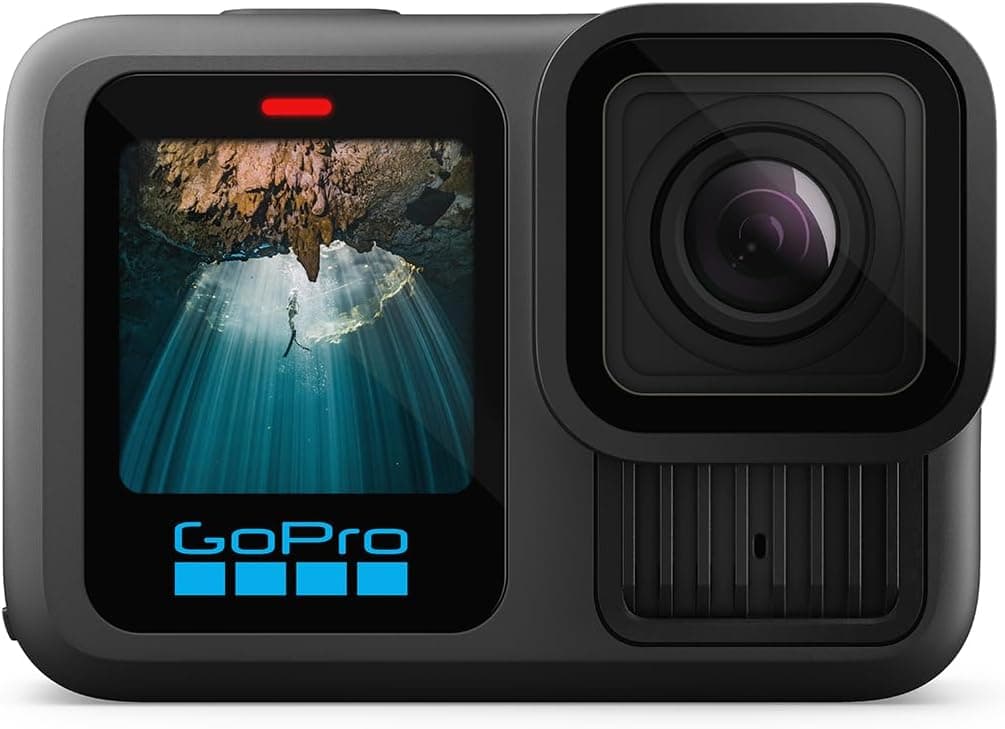
In the head-to-head of Insta360 X4 8K 360° Action Camera vs GoPro HERO13 5.3K Action Camera, the Insta360 X4 is the stronger overall pick for content creators who want a genuinely unique, immersive shooting format — its 8K 360° capture opens creative possibilities the GoPro simply cannot match. That said, the GoPro HERO13 is the smarter buy for adventurers and sports shooters who want a bombproof, familiar camera they can mount and forget. The A$3.11 price gap is negligible, so this decision is entirely about what you plan to shoot.
Quick Verdict
Buy the Insta360 X4 8K 360° Action Camera if you create adventure vlogs, real estate walkthroughs, travel content, or immersive social media footage where a single camera needs to capture everything around you. It suits creators who are willing to invest time learning the editing workflow in exchange for footage that genuinely stands apart from standard action camera video.
Buy the GoPro HERO13 5.3K Action Camera if you surf, mountain bike, ski, or participate in any high-impact sport where a compact, proven-waterproof camera needs to survive punishment and deliver sharp, stabilised conventional footage with minimal fuss. It also suits buyers already invested in the GoPro ecosystem — mounts, subscriptions, and accessories transfer directly.
Key Differences That Matter
Shooting Format: 360° Immersive vs Conventional Frame
This is the fundamental split between these two cameras. The Insta360 X4 uses dual fisheye lenses to capture a full spherical image at 8K resolution, which you then reframe in editing — a technique Insta360 calls "invisible selfie stick" shooting because the mount disappears from the final frame. Expert reviewers consistently highlight this as transformative for solo creators who cannot carry a separate camera operator. The GoPro HERO13 shoots a conventional 5.3K wide-angle frame: what you point it at is what you get. That simplicity is genuinely valuable for fast-moving sports, but it means you must nail your mount angle before you start. For Australian buyers shooting wide landscapes — the Kimberley, alpine trails, reef dives — the 360° format lets you decide the best angle after the fact.
Edge: Insta360 X4 — post-capture reframing eliminates the need to nail your shot angle in advance, a meaningful advantage for solo creators.
Resolution and Image Detail
The 8K versus 5.3K gap is not just a marketing number. Based on expert reviews and manufacturer specifications, shooting at 8K 360° gives the Insta360 X4 enough resolution to punch into a single direction and still export a crisp 4K conventional clip — effectively making it a 4K standard camera and a 360° camera simultaneously. The GoPro HERO13 at 5.3K delivers sharper per-pixel detail in its conventional frame than the Insta360 X4's reframed output at equivalent zoom levels, because no resolution is spent on the opposite hemisphere. For Australian sports content heading to YouTube at 4K or below, the difference is negligible in practice. For creators who want to future-proof their archive or sell to commercial clients, the X4's headroom matters.
Edge: Insta360 X4 — 8K capture provides usable 4K reframed output, giving one camera two distinct shooting modes.
Durability and Waterproofing
The GoPro HERO13 carries a strong track record for rugged waterproofing, with verified user feedback across diving, surfing, and whitewater kayaking confirming reliable performance in demanding Australian conditions. Reviewers note it handles salt water, sand, and impact well without a housing. The Insta360 X4 is also waterproof according to manufacturer specifications, but expert reviews note the dual-lens design means two exposed glass elements rather than one — increasing the surface area vulnerable to scratches and impacts. Lens protectors are available as accessories but add cost and a small resolution penalty. For anything involving serious physical punishment, the GoPro's single-lens design carries less risk.
Edge: GoPro HERO13 — a single exposed lens is meaningfully more durable than the X4's dual-lens arrangement in high-impact, abrasive conditions.
Learning Curve and Editing Workflow
Reviewers consistently identify the Insta360 X4's editing workflow as the steeper onboarding challenge. Insta360's companion app and desktop software are well-regarded for their AI-assisted reframing and stabilisation tools, but producing a polished final video requires engagement with that workflow — you cannot simply pull a clip and post it. The GoPro HERO13 integrates with GoPro's Quik app, and reviewers report it produces shareable footage with minimal editing intervention. For Australian buyers who want to shoot on the weekend and post on Sunday night, the GoPro's simpler output pipeline is a genuine practical advantage.
Edge: GoPro HERO13 — reviewers consistently report faster turnaround from shoot to shareable clip with minimal editing knowledge required.
Value for Money in Australia
At A$500.11 for the Insta360 X4 and A$497.00 for the GoPro HERO13, the price difference of A$3.11 is irrelevant to the buying decision — both cameras sit squarely in the premium action camera tier. What that money buys you differs significantly: the X4 delivers a fundamentally different capture format with higher resolution headroom, while the HERO13 delivers a refined, battle-tested conventional action camera. Neither is overpriced relative to its category. Both cameras are available through major Australian retailers including JB Hi-Fi, Amazon AU, and Harvey Norman — it is worth checking all three, as pricing and bundled accessories vary. eBay AU can offer competitive deals, but verify the seller ships from Australia to avoid warranty complications.
Under Australian Consumer Law, both cameras carry statutory warranty rights that exist independently of the manufacturer's own warranty period — if either camera fails within a reasonable timeframe due to a manufacturing defect, you are entitled to a remedy regardless of what the warranty card states. Purchasing from an Australian retailer such as JB Hi-Fi or Harvey Norman simplifies ACL claims considerably compared to purchasing from an overseas-based seller. Insta360 and GoPro both have Australian support channels, but keeping your receipt and proof of purchase from an authorised local retailer remains the most straightforward path to an ACL remedy if needed.
Who Should Buy the Insta360 X4 8K 360° Action Camera?
- Adventure vloggers and travel creators who shoot solo and want the freedom to reframe their footage in post rather than obsessing over mount angles in the field.
- Real estate and property professionals using virtual tours or social media walkthroughs, where 360° immersive footage has clear commercial value over standard video.
- Social media creators targeting Instagram Reels, TikTok, and YouTube Shorts who want visually distinctive footage that stands out from the sea of standard action camera clips.
- Filmmakers and content professionals who want a single camera capable of producing both conventional 4K clips and full 360° immersive content from the same shoot.
Who Should Buy the GoPro HERO13 5.3K Action Camera?
- Surfers, mountain bikers, and skiers who need a camera that survives repeated physical punishment in salt water, sand, and impact without a protective housing.
- Casual creators and sports enthusiasts who want sharp, stabilised footage they can share quickly without learning a complex editing workflow.
- Existing GoPro users who have already invested in GoPro mounts, chest harnesses, and accessories — the HERO13 is compatible with that existing ecosystem.
- Parents and families capturing kids' sports, camping trips, and outdoor activities who want a durable, straightforward camera that anyone in the family can operate confidently.
The Bottom Line
The Insta360 X4 8K 360° Action Camera is the stronger buy for creators who want a genuinely differentiated shooting format — 8K 360° capture with post-capture reframing is a creative capability the GoPro HERO13 cannot replicate at any price. The GoPro HERO13 wins the one scenario that matters most to it: extreme-condition sports shooting where ruggedness, simplicity, and fast turnaround from clip to post outweigh creative flexibility. At a near-identical price, your answer depends entirely on whether you prioritise creative format or physical resilience.