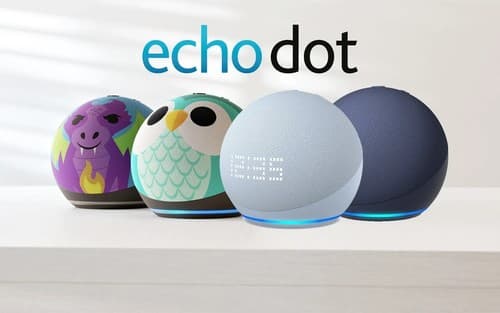

In the Amazon Echo Dot 5th Generation Smart Speaker vs Google Nest Mini 2nd Generation Smart Speaker head-to-head, the Echo Dot 5th Gen is the stronger all-round pick for most Australian households, thanks to its improved bass response, built-in temperature sensor, and deeper smart home integration. The Nest Mini 2nd Gen, however, earns its place for Google-first households or anyone who wants a wall-mountable speaker at a price that undercuts the Echo Dot by nearly A$42.
Quick Verdict
Buy the Amazon Echo Dot 5th Generation Smart Speaker if you already own Amazon smart home devices, you want a richer audio experience than the previous Echo Dot generation delivers, or you'd like a passive room temperature reading built into your speaker without adding a separate sensor. It's also the better choice if you rely on Alexa skills for routines, shopping lists, or third-party app integrations.
Buy the Google Nest Mini 2nd Generation Smart Speaker if your household runs on Google services — Gmail, Google Calendar, Google TV, or Chromecast — and you want hands-free voice control that feels genuinely native to that ecosystem. It's also the smarter buy if you need a discreet speaker mounted flush to a wall in a hallway, kitchen, or bedroom, or if your budget is firmly under A$60.
Key Differences That Matter
Sound Quality: Modest Gap, Real-World Impact
Both speakers are compact and neither replaces a dedicated Bluetooth speaker. That said, expert reviews consistently report that the Echo Dot 5th Gen delivers a noticeably fuller low end compared to its predecessor, and side-by-side listener impressions generally place it a step above the Nest Mini 2nd Gen for music playback in a standard Australian living room or kitchen. The Nest Mini's audio is described by reviewers as adequate for podcasts, radio, and casual listening — but thin on bass when pushed at higher volumes. If you're playing a Spotify playlist during a dinner party, the Echo Dot will fill a small room more convincingly.
Edge: Amazon Echo Dot 5th Generation Smart Speaker — reviewers consistently report fuller bass response at typical listening volumes.
Response Speed: On-Device Processing vs Cloud Dependency
The Nest Mini 2nd Gen includes a dedicated on-device machine learning chip, which means certain commands — particularly those Google Assistant handles locally — process faster and still function during brief internet dropouts. The Echo Dot 5th Gen routes the majority of Alexa processing through Amazon's cloud servers, so a slow NBN moment can introduce a slight lag. For most Australian households with stable broadband this difference is negligible day-to-day. But if your home internet drops regularly, or you're installing a speaker in a spot with patchy Wi-Fi, the Nest Mini's local processing chip is a genuine practical advantage.
Edge: Google Nest Mini 2nd Generation Smart Speaker — the dedicated ML chip means faster local responses and basic functionality during internet outages.
Built-In Temperature Sensor: A Feature That Changes Automations
The Echo Dot 5th Gen includes a built-in ambient temperature sensor — a feature the Nest Mini 2nd Gen simply does not have. This lets you trigger Alexa smart home routines based on actual room temperature: turning on a fan when your lounge hits 28°C, for example, or adjusting smart blinds in summer. For Australian homes using smart climate control, this is a meaningful real-world differentiator rather than a spec-sheet novelty. You'd need to purchase a separate temperature sensor to replicate this capability with the Nest Mini setup.
Edge: Amazon Echo Dot 5th Generation Smart Speaker — the only device here with a built-in temperature sensor, enabling temperature-triggered smart home routines without extra hardware.
Physical Versatility: Wall-Mounting vs Shelf Placement
The Nest Mini 2nd Gen has a built-in wall mount integrated into its base — no bracket required, no extra purchase. You simply hang it on a screw or hook. This makes it genuinely useful in kitchens, hallways, bathrooms, or laundries where bench space is tight and an always-on voice assistant is handy. The Echo Dot 5th Gen is designed to sit on a flat surface. You can buy third-party wall-mount accessories, but that adds cost and complexity. If your ideal speaker location is vertical rather than horizontal, the Nest Mini wins on practicality alone.
Edge: Google Nest Mini 2nd Generation Smart Speaker — the built-in wall mount is a genuine installation advantage in Australian homes where bench space is limited.
Value for Money in Australia
At A$94.97 for the Echo Dot 5th Gen versus A$53.27 for the Nest Mini 2nd Gen, the price gap is A$41.70 — nearly enough to buy a second Nest Mini. That's a meaningful difference on a budget. The Echo Dot justifies its higher price with better audio output, the temperature sensor, and access to a broader Alexa skill library. But if you're buying two or three speakers to cover different rooms, that per-unit cost compounds quickly, and the Nest Mini's lower price starts to look very attractive. Both speakers are available through Amazon AU and JB Hi-Fi, with the Nest Mini also regularly discounted at Harvey Norman and Officeworks. The Echo Dot appears on eBay AU from third-party sellers, though buying from authorised Australian retailers is advisable.
Under Australian Consumer Law (ACL), both products carry statutory warranty rights that go beyond the manufacturer's stated warranty period. If either speaker develops a fault within a timeframe that a reasonable person would expect it to last — generally considered two or more years for a consumer electronics device at this price point — you're entitled to a remedy from the retailer, not just the brand. This applies whether you buy from Amazon AU, JB Hi-Fi, Harvey Norman, or Officeworks. Keep your proof of purchase. Neither product's manufacturer warranty negates your ACL rights, and Australian retailers cannot tell you otherwise.
Who Should Buy the Amazon Echo Dot 5th Generation Smart Speaker?
- Alexa smart home users who already control lights, plugs, or appliances through Amazon's ecosystem and want a seamless hub that expands those routines with temperature data.
- Music-first listeners on a budget who want the best audio performance available in a sub-A$100 compact smart speaker, based on reviewer consensus placing it above the Nest Mini for fullness of sound.
- Households building out an Alexa skill setup — shopping list management, Audible integration, third-party app connections — where the breadth of Amazon's skill library adds daily utility.
- Australian renters or apartment dwellers who want a speaker on a shelf or benchtop and don't need wall-mounting, prioritising sound quality and smart home depth over physical flexibility.
Who Should Buy the Google Nest Mini 2nd Generation Smart Speaker?
- Google ecosystem households who use Google Calendar, Gmail, Google TV, or Chromecast devices daily, and want voice commands that feel native rather than bolted-on.
- Wall-mount installers — renters, homeowners, or kitchen renovators — who need a compact speaker flush-mounted without purchasing additional accessories or drilling extra holes.
- Budget-conscious buyers stretching a speaker across multiple rooms, where the A$53.27 price point makes a three-room setup achievable for what a single Echo Dot costs.
- Users with unreliable internet connections in regional or rural Australia who benefit from the Nest Mini's on-device ML chip handling certain commands locally during NBN outages.
The Bottom Line
The Amazon Echo Dot 5th Generation Smart Speaker is the better all-round smart speaker for most Australian buyers in 2026, delivering fuller audio, a built-in temperature sensor, and a richer smart home skill ecosystem that justifies its higher price. The one scenario where the Google Nest Mini 2nd Generation Smart Speaker clearly wins is for Google-first households on a tight budget who need wall-mountable speakers across multiple rooms — at A$53.27 per unit, it's a genuinely compelling proposition that the Echo Dot cannot match on price alone.