AI Powered Laptops Australia (2026): The Ultimate ASUS Vivobook 14 vs HP OmniBook 5 Comparison
 CompareMates Editorial Team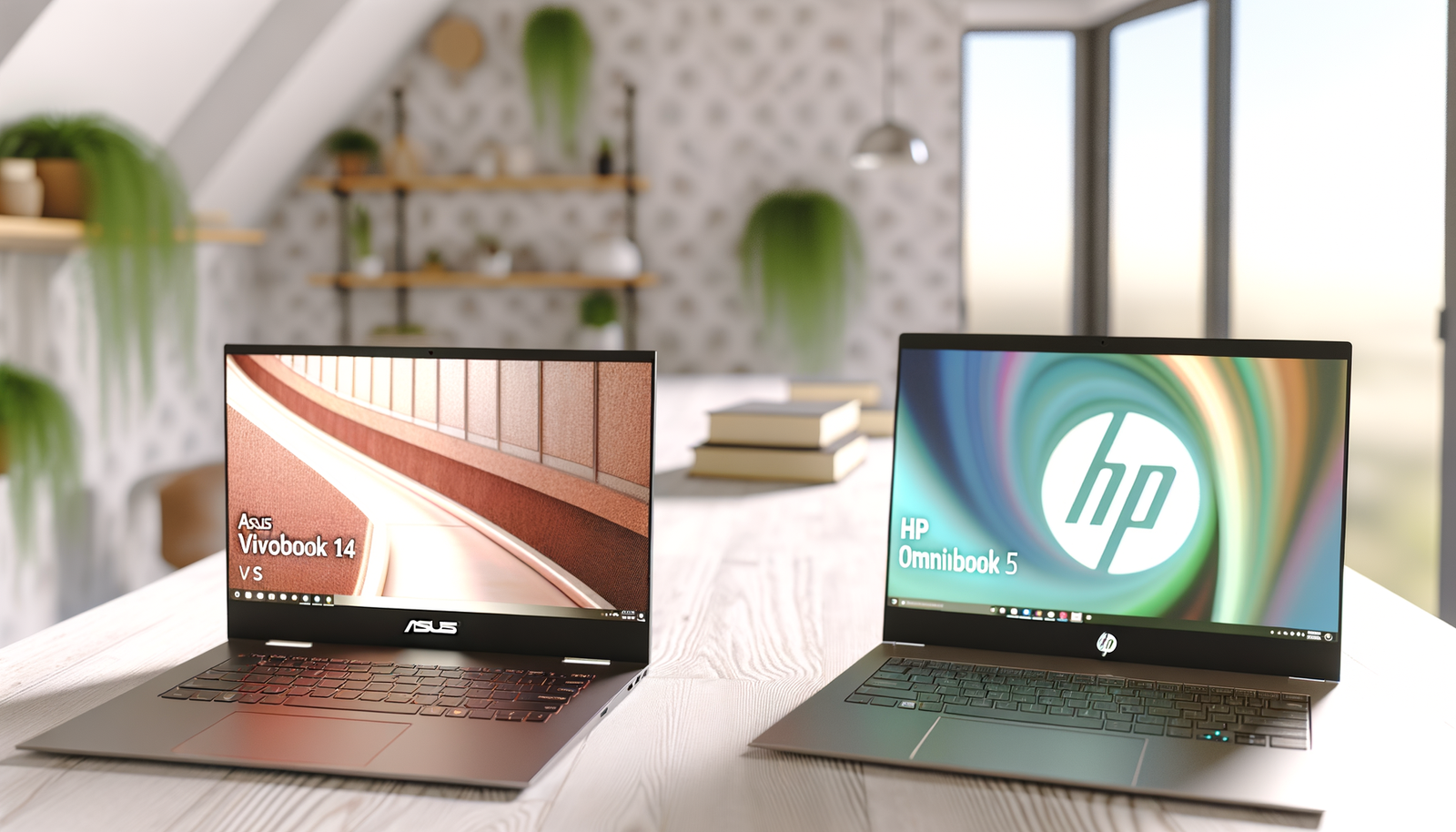
Shopping for AI powered laptops Australia has become increasingly complex as manufacturers integrate advanced artificial intelligence capabilities into their mainstream offerings. The ASUS Vivobook 14 and HP OmniBook 5 represent two compelling approaches to AI-enhanced computing, each targeting different user needs and budgets in the Australian market. See more product comparisons in Australia.
This comprehensive comparison examines both laptops across key decision factors including AI performance, build quality, display technology, and real-world usability. By the end, you’ll understand which model best suits your specific requirements and offers the strongest value proposition for Australian consumers.
Table of Contents
Key Features Comparison: AI powered laptops Australia
| Feature | ASUS Vivobook 14 | HP OmniBook 5 |
|---|---|---|
| AI Processing | Varies by model/retailer | Varies by model/retailer |
| Display | 14-inch options available | 14-inch options available |
| Build Material | Varies by specific variant | Varies by specific variant |
| Battery Life | Depends on configuration | Depends on configuration |
| Weight | Varies by model | Varies by model |
| Connectivity | Modern port selection | Modern port selection |
| Warranty AU | Standard manufacturer warranty | Standard manufacturer warranty |
| Best For | Budget-conscious users | Business professionals |
Recommended Product on Amazon Australia


AI Performance and Capabilities
The AI capabilities in both laptops depend heavily on the specific processor configuration available in Australia. Modern AI-powered laptops typically include dedicated neural processing units (NPUs) that accelerate machine learning tasks, improve battery efficiency, and enable features like intelligent noise cancellation and adaptive performance scaling.
ASUS has been integrating AI features across their Vivobook range, though the specific AI capabilities may vary significantly between different Vivobook 14 variants sold in Australia. These features can include intelligent cooling management, adaptive display brightness, and AI-enhanced audio processing.
HP’s OmniBook series represents their business-focused approach to AI integration. The OmniBook 5, where available in Australia, may include enterprise-grade AI security features, intelligent collaboration tools, and adaptive performance optimisation designed for professional workflows.
Real-World AI Applications
Both laptops can potentially handle common AI-accelerated tasks such as video conferencing with background blur, voice recognition, and basic content creation assistance. However, the specific performance levels depend on the exact processor and AI accelerator included in Australian market variants.
For users requiring intensive AI workloads like machine learning development or advanced content creation, the effectiveness will vary based on the specific hardware configuration available through Australian retailers.
Display and Visual Experience
Display quality significantly impacts daily usability, particularly for professionals spending extended periods working on their laptops. Both the ASUS Vivobook 14 and HP OmniBook 5 offer 14-inch displays, though specific panel technologies and resolutions may vary by model variant available in Australia.
The Vivobook 14 series has historically offered various display options across different price points. Some variants may include higher refresh rates or improved colour accuracy, though exact specifications depend on the specific model stocked by Australian retailers.
HP’s OmniBook 5 likely emphasises business-appropriate display characteristics such as anti-glare coatings, good outdoor visibility, and colour accuracy suitable for professional presentations. However, specific display specifications should be verified with Australian retailers before purchase.
Build Quality and Design Philosophy
ASUS positions the Vivobook 14 as a versatile laptop balancing affordability with modern features. The build quality typically reflects this positioning, offering solid construction without premium materials that would significantly increase cost.
The design language usually emphasises portability and everyday usability, with attention to practical details like keyboard comfort and thermal management. However, specific build materials and design elements can vary between different Vivobook 14 variants.
HP’s OmniBook series traditionally targets business users requiring reliable, professional-grade construction. This may translate to more robust build quality, better keyboard durability, and design elements suited to frequent travel and professional environments.
Performance for Different Use Cases
Students and General Users
Both laptops can handle typical student workloads including research, document creation, online learning, and entertainment. The specific performance levels depend on processor configurations available in Australia, but modern variants should provide adequate performance for these tasks.
The AI features in both models may enhance the user experience through improved battery management, adaptive performance scaling, and enhanced video conferencing capabilities increasingly important for remote learning.
Business Professionals
Professional users may find differences in how each laptop handles business-specific requirements. The HP OmniBook 5 may offer advantages in enterprise integration, security features, and collaboration tools designed for business environments.
ASUS Vivobook 14 variants may provide better value for professionals with less demanding requirements or those prioritising cost-effectiveness over enterprise-specific features.
Content Creators
For content creation tasks, performance depends heavily on specific processor and graphics configurations. Both laptops may include AI acceleration for tasks like photo editing, video processing, and content optimisation, though capabilities vary by exact model.
Users requiring intensive creative workloads should verify specific hardware specifications with Australian retailers, as performance can vary significantly between different variants of each model.
Connectivity and Ports
Modern laptops require comprehensive connectivity options for various peripherals and external displays. Both the ASUS Vivobook 14 and HP OmniBook 5 likely include contemporary port selections, though exact configurations may vary.
Typical connectivity features may include USB-C ports with various capabilities, traditional USB-A ports for legacy devices, HDMI output for external displays, and audio jacks. Some variants may include additional ports like microSD card readers or dedicated charging ports.
The specific port configurations available in Australia should be verified with retailers, as these can vary between different model variants and regional specifications.
Value Proposition Analysis
The ASUS Vivobook 14 typically positions itself as offering strong value for mainstream users seeking AI-enhanced capabilities without premium pricing. This approach may appeal to students, home users, and professionals with moderate performance requirements.
HP’s OmniBook 5 likely commands a higher price point but may justify this through enhanced build quality, business-focused features, and potentially superior AI integration designed for professional workflows.
Australian consumers should consider their specific use cases, budget constraints, and the importance of features like build quality, AI capabilities, and manufacturer support when evaluating the value proposition of each option.
Warranty and Support Considerations
Both ASUS and HP provide manufacturer warranties for their products sold in Australia, typically covering hardware defects and manufacturing issues. The specific warranty terms, duration, and coverage details may vary between models and should be verified at time of purchase.
Australian Consumer Law provides additional protections beyond manufacturer warranties, ensuring consumers receive products that meet reasonable quality and durability expectations regardless of specific warranty terms.
Support quality can vary between manufacturers and may include factors like local service centre availability, response times, and the quality of technical support provided to Australian customers.
Key Takeaways
The choice between the ASUS Vivobook 14 and HP OmniBook 5 depends primarily on your specific requirements, budget, and priorities. The Vivobook 14 may offer better value for general users seeking AI-enhanced capabilities at competitive pricing, while the OmniBook 5 may provide advantages for business users requiring professional-grade features and build quality.
Before making a final decision, verify specific model availability, exact specifications, and pricing with Australian retailers. The AI capabilities, performance levels, and feature sets can vary significantly between different variants of each laptop series.
Consider your primary use cases, required performance levels, and the importance of factors like build quality, display characteristics, and manufacturer support when making your final choice.
Frequently Asked Questions
Which is better for most Australians: ASUS Vivobook 14 or HP OmniBook 5?
For most people searching “AI powered laptops Australia”, the better choice comes down to your main use case. Pick the option that best matches your priorities (performance, convenience, running cost, compatibility, or warranty support in Australia), then compare the trade-offs section-by-section in this guide.
What are the biggest differences to look for when choosing a AI powered laptops Australia?
Focus on the factors that affect day-to-day use: core performance/specs, ease of use, size/weight (if relevant), ongoing costs, and reliability. If you’re buying in Australia, also check local warranty terms, returns, and whether the model/variant sold here matches the specs discussed.
Do these products have Australian warranty and support?
In Australia, warranty/support can vary by seller and whether the unit is Australian stock. Check the retailer listing for “AU warranty” (and who provides it), return windows, and whether support is handled locally or via the manufacturer.
Is it worth paying more for the higher-end option?
It’s worth paying more only if you’ll actually benefit from the upgrades (e.g., better performance, longer lifespan, improved efficiency, or time-saving features). If the extra features won’t change how you use it, the better-value model often makes more sense.
What should I check before buying online in Australia?
Confirm the exact model name/variant, included accessories, delivery timeframes, and return policy. If buying via a marketplace listing, double-check who the seller is and whether the warranty is Australian stock.
Where to Buy in Australia
• JB Hi-Fi
• Jaycar
• Bing Lee